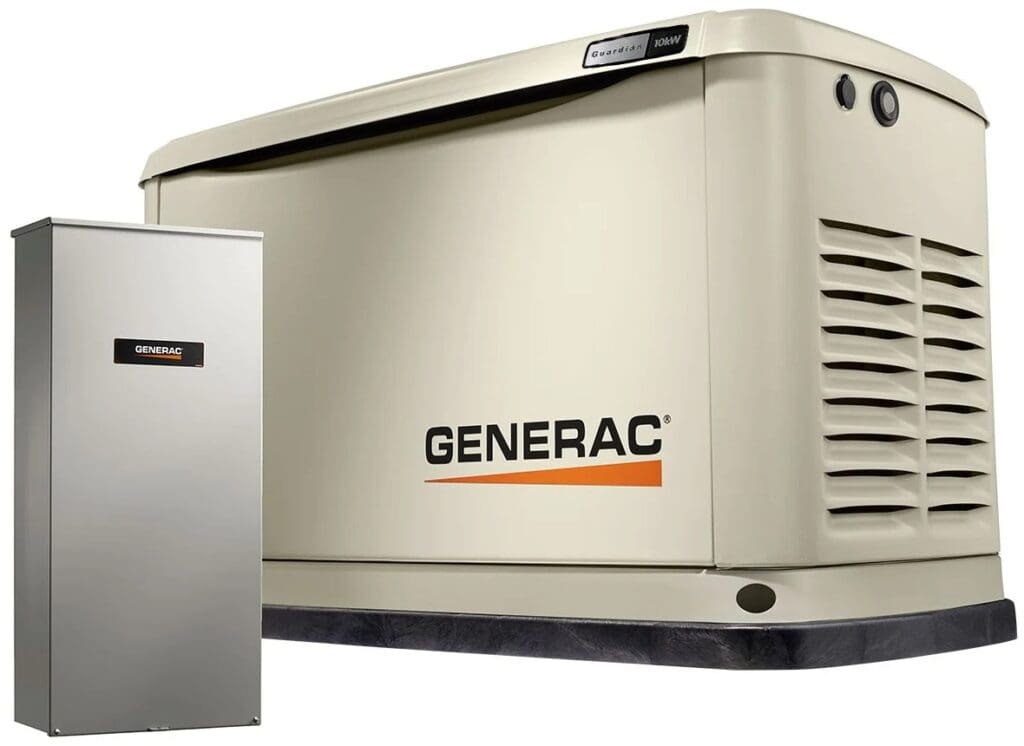
The Difference Between Whole-Home and Backup Generators
When shopping for a generator, you may be confused by the different types available. From portable units to whole-home generators, there are several choices. It’s important to be well informed about the differences between generator types when making a final decision. They each have various purposes and features that buyers should be aware of.
At My Reliable Power, we’re experts in generator installation, and have installed over 10,000 units. We created this guide to highlight the differences between whole-home and backup generators so you can make an informed decision.
What Is a Whole-Home Generator?
Whole-home generators are designed to power every circuit in a home during an outage, allowing you to run your HVAC, refrigerator, water heater, lighting, and more.
They are permanently installed outside your home and automatically turn on during outages using a transfer switch. Whole-home generators run on a reliable fuel source, such as natural gas, propane, or diesel.
Key capabilities:
- Automatic operation: The automatic transfer switch (ATS) will detect an outage almost instantly and kick on the generator to provide seamless backup power.
- Long duration power: Since whole-home generators are often connected to natural gas lines or large fuel tanks, they can provide ongoing power for extended periods.
- Automatic shutdown: A whole-home standby generator will automatically shut down when reliable and safe power is restored. This means your generator will not keep running when it’s not needed, saving fuel.
Power coverage:
- Whole-home generators typically range from 15 kW to 50 kW depending on the size of your home and power demands.
Long-term benefits:
- Increased property value: As a permanently installed fixture that’s integrated into your home electrical system, a whole-home generator can increase property value.
What Is a Backup Generator?
A portable or partial coverage backup generator requires manual activation when power is lost. They typically can be used to power a few select appliances in case of an emergency, such as the refrigerator and lighting system.
While they don’t provide whole-home power, they can be extremely helpful for those who need to power select appliances such as medical devices or fans. These units require manual shutdown after utility power is restored.
Key capabilities:
- Portability: One of the benefits of a backup generator is that it can be moved to different places and isn’t only for use at your own home. They are frequently used for outdoor events or construction sites where access to power is limited.
- Diverse fuel options: Backup generators generally offer diverse fuel options, such as gasoline, diesel, or propane. The choice lies in availability and consumer preference.
Power coverage:
- Portable backup generators typically range from 2kW to 10kW.
Long-term benefits:
- Affordability: Backup generators are inexpensive compared to whole-home generators and are ideal for smaller setups or residential use.
- Ease of use: Portable generators are manually activated but easy to use.
Pros and Cons of Each System
Whole-home and backup generators both have pros and cons. Let’s take a look at the reliability, installation costs, maintenance, and energy efficiency of each generator type.
Whole-Home Generator
Whole-home generators are a great option for homes that need reliable backup power to protect vulnerable residents, such as the elderly, young children, or those with medical needs.
- Reliability: In general, whole-home generators are an extremely reliable source of backup power. Using the automatic transfer switch, they automatically turn on when power is lost. However, if a whole-house generator is not properly maintained, you run the risk of failure.
- Installation cost: Most homeowners spend between $7,000 and $15,000 between the cost of the whole-home generator itself and installation costs.
- Maintenance: A whole-home generator requires annual or bi-annual maintenance. This includes checking and changing the oil, replacing spark plugs and filters, inspecting the battery, running a fuel system leak test, and more.
- Energy efficiency: The energy efficiency of a whole-home generator will depend on the chosen fuel source and the load. For the most energy efficiency, it’s recommended not to run the generator fully loaded. Aim for no more than 70-80% of its capacity.
Backup Generator
Portable backup generators are great for use in remote locations, for outdoor events, or in residential scenarios.
- Reliability: Portable backup generators serve as a reliable source of power as long as the fuel tank is full. The downside to backup generators is that homeowners must store replacement fuel for their unit. Depending on how long the generator is running, it will need to be refilled with fuel.
- Installation cost: The upside to a portable backup generator is that there are no installation costs. You only need to pay the cost of the unit itself, which is typically very affordable.
- Maintenance: The maintenance of portable generators is pretty similar to whole-home generators but on a smaller scale. You’ll need to change the oil, spark plugs, filters, and check the battery.
- Energy efficiency: The efficiency of backup generators varies by type. For example, inverter generators are more fuel-efficient than traditional models. Overall, efficiency will depend on factors like size, load, and operating conditions.
Which Option Is Best for Florida Homes?
The best option for Florida homes depends on the home size, typical outage frequency, and location. For Florida homes along the coast or in hurricane-prone areas, a whole-home generator is recommended.
Smaller homes with fewer power needs may be able to use a portable backup generator to power essential appliances, such as refrigerators, lights, and sump pumps. If you want to power your entire home during storms and power outages, a whole-home generator is the better option.
Why My Reliable Power is the Best Choice
My Reliable Power is South Florida’s expert partner in generator services. With factory certified generator technicians and local expertise, we’re the top choice for Florida residents.
Services we provide:
- Generator installation (including after-installation support)
- Generator repair
- Generator maintenance
- Generator monitoring
- Emergency generator services
We’ve been in business for over 20 years and proudly serve Boca Raton, Delray Beach, Fort Lauderdale, Fort Myers, Fort Myers Beach, Naples, Stuart, and Wellington.
Call My Reliable Power today at 888-991-4672 or schedule an appointment online for the best home power solutions.
FAQs
Can a backup generator power my entire home?
Typically, a portable backup generator cannot power your entire home. It depends on the capacity of the generator, the size of your home, and its power needs. However, in general, a portable generator does not have enough capacity to power your home. A whole-home generator is designed to handle greater power demands and power your entire home.
Are whole-home generators worth the investment?
For homeowners in South Florida, yes, whole-home generators are often worth the investment. Whole-home generators offer safety, comfort, and reliable power for critical medical devices.
How long does each type last?
A standard whole-home generator typically lasts between 1,500 and 3,000 hours or 10-30 years. A portable backup generator generally lasts 1,000 to 2,000 or 10-15 years.