


Blog
Portable vs. Standby Generators: Which Backup Power Option Is Best for South Florida Homes?

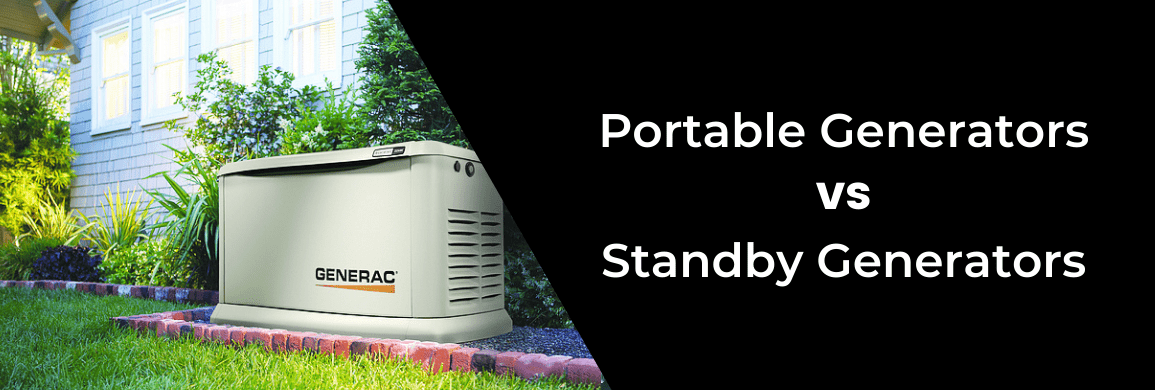
Living in South Florida has its perks, like loads of sun and pristine beaches, but what about storm season? Storm season can bring severe weather and extended power outages. This guide will compare portable vs. standby generators for South Florida homeowners looking for reliable backup power.
Read on for information about portable and standby generators so you can make an informed decision. We’ll look at cost, coverage, convenience, and share next steps for purchasing a generator.
Portable vs. Standby Generators for Home: Quick Comparison
One of the first questions people ask about generators is how much they cost. Luckily, we have a handy cost calculator for generators in South Florida.
The general price range for a portable generator is $500 to $2,500. Standby generators have a price range of $8,000 to $16,000, including installation costs.
Here’s a comparison table of other factors to help you make the best choice.
Portable vs. Standby Generator Comparison Table
Hurricane outagesUseful for short outages; limited run time during extended outagesBest choice for long hurricane outages
Portable Generators: Essentials-first for Shorter Outages
Portable generators are most used to power essential or critical loads for short outages. They’re ideal for running select necessities, such as the refrigerator, a few lights, phone chargers, medical devices, or small window AC units. Portable generator units run on gasoline, propane, or diesel and must be used outside only and at least 15-20 feet away from your home. Never use them in your garage, under a covered patio, or near windows to prevent deadly carbon monoxide (CO) poisoning.
Portable generators are manually operated. Users must position them, start them, and connect appliances. They are mobile, which is convenient for some smaller homes or RVs, with many models offering wheels for easy transport. However, their run time is limited by tank capacity and fuel availability, making them only suitable for shorter power outages.
Pros of portable generators:
- Lower upfront cost than standby generators
- No permanent installation required
- Portable and versatile
- Flexible fueling options
Portable generator trade-offs:
- Manual setup and startup required
- Limited power output
- Fuel storage and refueling needed
- Louder operation
Standby Generators: Automatic Backup for Longer Outages
Standby generators are permanently installed to provide automatic backup power via an automatic transfer switch. Standby generators are designed to power your whole home during power outages to keep you safe and comfortable. Not only can you power essential loads but also your HVAC system and other nice-to-have appliances.
These units provide automatic power when the grid cuts out, offer broader coverage, and require less hands-on work. They’re designed for longer outages and can run continuously if attached to a natural gas line.
Pros of standby generators:
- Automatic operation
- Powers entire home
- Continuous fuel supply with natural gas line or large propane tank
- Quieter operation
- Adds property value
Standby generator trade-offs:
- Higher upfront cost
- Professional installation required
- Not portable
The 3 Differences That Matter Most When Choosing
There are three primary differences between portable and standby generators to consider.
Coverage & Sizing
The main difference is that portable generators are only designed for essential loads while standby generators provide whole-home comfort. Consider your needs during outages, the size of your home, and what you’d like to power with a generator.
Fuel & Run Time Planning
Another difference is that portable generators have small tanks that need to be refueled periodically, limiting their run time. Standby generators can run continuously if connected to natural gas and also have a very large tank if powered by propane. With an automatic supply, standby generators can run safely for much longer than portable units.
Safety & Connection
Lastly, portable generators require manual connection and typically use heavy-duty extension cords, or a professionally installed manual transfer switch. Standby generators use an automatic transfer switch and are permanently wired to your electrical panel. Portable units must only be operated outside and away from your house to prevent carbon monoxide (CO) buildup.
Costs + Installation + Safety Basics (What Drives Total Price)
Major drivers of generator costs include sizing and load planning, fuel type, transfer switch or electrical work, installation, and basic maintenance.
In general, the more powerful your generator, the more it costs. You should complete load calculations to understand how much power your generator needs for your home’s demands. Add all starting watts and running watts of everything you want to run simultaneously and then tack on a 20-30% buffer to be safe.
The fuel type will also dictate the overall price of your generator. Propane is typically the most expensive fuel type that a generator can run on.
If you want a manual transfer switch for your portable unit, that will incur an extra cost.
Generator installation is required for standby generators. A professional will safely install your whole-home standby generator to ensure seamless operation.
Both portable generators and standby generators require basic maintenance that can be handled by homeowners. However, standby generators also involve professional maintenance needs that should be factored into your cost comparison.
Which Generator Should You Choose?
The generator type you choose will depend on your specific needs.
Portable generators are the lower cost option but require manual effort and only power essential loads for short periods.
Standby generators are designed for whole-home coverage and offer automatic backup power. They are a higher investment upfront but provide reliable power for you and your family during storms.
If you are interested in residential generators or need generator maintenance in South Florida, contact Reliable Power Systems. For generator repair services and friendly expertise, give us a call at (561) 408-5147 or schedule online.
Schedule an Appointment
Schedule Online(561) 408-5147Frequently Asked Questions
The decision is truly up to you and your needs. However, in general, if you’re looking to power your whole home during storm outages, a standby generator is best.
No, generally portable generators can only power select or essential loads during a power outage and are not meant to power your whole home.
Depending on the size of your portable generator, a transfer switch is ideal for connecting to your home’s circuit breaker panel but is not required.
Many homeowners find that generators are worth the cost for the peace of mind and reliable backup power they provide. If you live in South Florida where storms and hurricanes are common, a standby generator ensures you stay safely powered during outages.
Yes, standby generators require routine maintenance by a professional. Maintenance ensures they automatically during an outage and perform reliably when you need them most.