


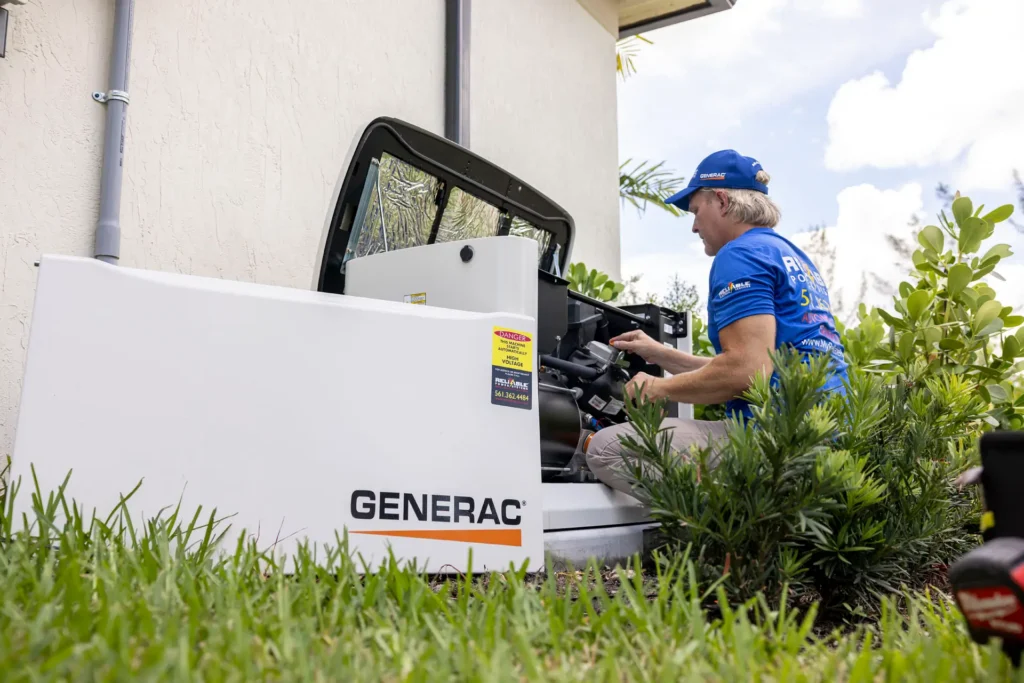
Since 2002, Reliable Power Systems has provided professional standby generator installation services in Florida. Our skilled team has earned us an A+ BBB rating, Generac Premier Dealer designation, Kohler Titanium designation, and hundreds of five-star Google reviews.
Florida’s storm season calls for whole-home residential generators to protect local families. Proper generator selection starts with evaluating your home’s actual electrical needs. Our fully in-house team handles planning, installation of the unit and transfer equipment, testing, and ongoing service.
Contact us today for dependable Generac generator installation in Florida. Call (561) 408-5147 for a free estimate before storm season or book an appointment online!
Schedule Online(561) 408-5147How Whole-Home Generator Installation Works
A whole-home generator keeps your lights, HVAC, and appliances running during power outages, but installing one takes more than setting it beside your home and plugging it in.
Whole-home generator installation involves many steps, including:
- Home and load assessment: A generator technician will calculate how much backup power your home actually needs by reviewing your electrical panel, major appliances, and HVAC system.
- Generator selection: Based on the load calculations, the technician will recommend the right generator size and fuel type for your home.
- Site planning: Once the generator is chosen, the technician places it on a level pad with proper clearance from windows, doors, and vents.
- Electrical integration: A licensed electrician will then wire the generator into your home’s electrical system.
- Transfer equipment installation: An automatic transfer switch (ATS) detects outages, disconnects your home from the utility grid, and kicks on backup power. It also prevents dangerous backfeeding into the grid.
- Fuel requirements (where applicable): Generators typically run on natural gas or propane. As part of installation, a technician may connect your generator to your gas line, upgrade the meter, or set up a propane tank.
- Permitting and code coordination: Our technicians pull the necessary electrical and mechanical permits, follow local codes, and schedule inspections.
- Startup and testing: Once the generator is installed, the system is commissioned and tested under load.
Choosing the Right Generator for Your Fort Myers or Boca Raton Home
Choosing a standby generator for your home depends on what systems you want to keep running and how much power they draw, not the square footage of your house. Two homes of similar size can have very different electrical demands.
A proper sizing review considers critical loads, such as lighting, the fridge, the water heater, and the HVAC system. Some homeowners want their entire home powered, while others select only essential circuits.
Heating and cooling equipment plays a huge role in proper generator sizing. Starting watts as well as running watts must be considered during load assessments.
If your home uses a well pump or a sump pump, they should be treated as critical loads. It’s also important to consider medical devices, such as oxygen concentrators, CPAP machines, stair lifts, or refrigerated medications.
A technician will determine which loads can realistically run together and may recommend load management devices. You should also think about future needs or plans. For instance, if you plan to install an EV charger or new HVAC system in the next couple of years, plan for that in the load assessment.
Whole-Home vs. Selected-Load Backup Power
Backup power systems aren’t all the same. Some systems can support a broad range of circuits, while others may be configured around select essential loads. Understanding the difference between whole-home and selected-load systems helps you choose the right setup for your home.
Broad-circuit backup power systems can support lighting, outlets, HVAC, and sometimes large appliances. Selected-load systems are configured around a set of essential circuits, like lighting, refrigeration, the internet, and a heating or cooling system.
Actual coverage depends on your generator’s capacity and system design. A licensed electrician can review your electrical panel and priorities to recommend a configuration that works for your household.
What Is an Automatic Transfer Switch?
An automatic transfer switch detects utility loss of power, then transfers the electrical load to your generator within seconds. It safely returns service to the grid when utility power is restored.
An automatic transfer switch must be wired into your home’s electrical service and matched to your generator and panel. A licensed electrician must complete the installation because a mistake can send power back into utility lines, putting line workers at risk.
Generator Fuel & Site Considerations
Reliable’s technicians will help you choose an approved fuel source for your generator. Standby generators typically run on either natural gas or propane. The generator model determines which type of fuel is used, how much space it needs, and what clearances apply.
We’ll place your generator on a level pad outside your home with proper clearance from windows, doors, and vents. This keeps exhaust away from your home and helps prevent overheating.
Your municipality, utility company, or HOA may have set rules for generators. Have your installer verify what rules apply to your address.
Generator Installation and Your Electrical Panel
A generator installer should check your existing panel’s condition, including age, brand, and signs of corrosion or overheating. If your panel isn’t in good shape, it will need repair or replacement before generator installation.
The panel also needs enough available capacity and open breaker space to support a generator connection. An automatic transfer switch is wired in between the utility, the panel, and the generator. Some homes may need electrical upgrades, such as a new breaker, a subpanel, or full panel replacement before a generator is installed.
If your panel is outdated, contact us for electrical panel upgrade and replacement services.
Generator Installation for South Florida Hurricane Preparedness
In Florida, storm-related utility outages are extremely common, especially from June through November. Planning before hurricane threats helps protect your family and your home from storm impacts.
A standby generator is an excellent tool for Florida homeowners looking for backup power. A generator can offer backup power for select household priorities to keep your home safe and comfortable during extended outages.
Schedule generator installation before storm season to avoid longer timelines, higher prices, and limited equipment. Reliable Power Systems helps you plan, install, and maintain a standby generator properly sized for your needs.
What Happens After Installation?
After professional generator installation, we complete a few final steps to confirm the unit is working properly. We’ll start up the generator and test it under load to ensure that it operates correctly and that the transfer switch works.
We’ll also walk you through a homeowner orientation to make sure you understand how the system operates, what to expect during outages, and how to read the control panel. Our technicians will provide guidance on recommended generator maintenance timelines and offer repair support.
Why Choose Reliable Power Systems for Generator Installation?
We know you have options when it comes to generator installation in Florida. Here’s why our customers choose us:
- Generator specialization
- Installation capability
- Manufacturer-specific expertise
- Electrical service capabilities
- Florida service footprint
Schedule a Generator Installation Consultation
For generator installation in Fort Myers or Boca Raton, contact Reliable Power Systems. Our professional generator technicians and licensed electricians have the technical know-how to safely install whole-home generators.
Call us today at (561) 408-5147 or schedule a free consultation online!
Schedule Online(561) 408-5147